The Shenzhen International Museum of Art in Guangming
By Guide in Shenzhen · · 9 min read
Fifteen halls in two hull-shaped buildings, out in Guangming Science City. It opened in May 2026, it is a long way from where you are staying, and the opening exhibitions have already come down.
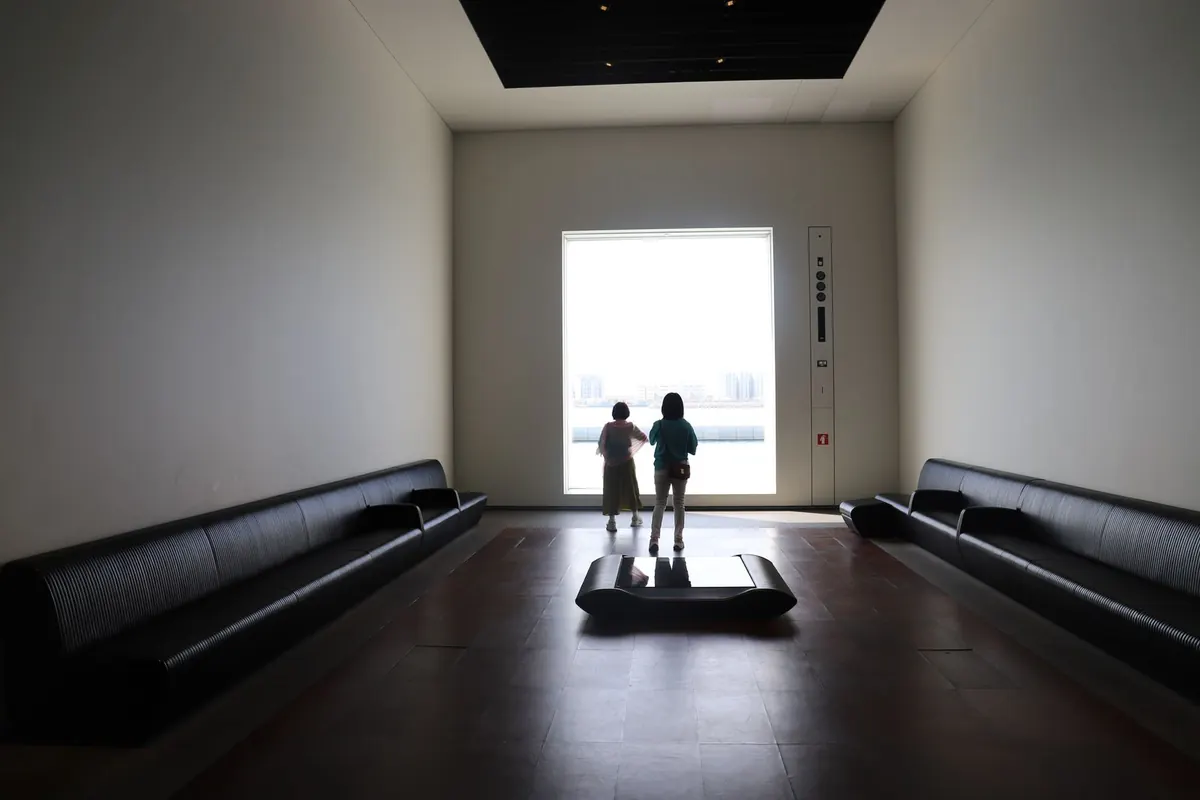
The Shenzhen International Museum of Art is in Guangming Science City, out in the northwest of the city, and it opened on the thirtieth of May 2026. Fifteen exhibition halls sit inside two hull-shaped buildings by the architect Cui Kai. Allow half a day, because most of it is the journey.
That is the answer. Whether you should give it half a day is the part worth reading.
A quick correction first, because it is the reason a lot of people end up here. There is no Asia Art Museum in Shenzhen. The name gets typed a great deal and it belongs to nothing. If somebody told you to visit the Asia Art Museum in Guangming, this building is what they meant.
[Serious face now.] Every English page about this museum is still advertising the opening exhibitions, and most of them have closed. The bronze animal heads came down in July. The Budapest loan was only ever booked through the end of August. A museum three months old is mostly a promise about what happens next, and the listings you are reading are already history.
So this is a post about the building, the shape of a visit and the cost of getting there. For what is actually hanging this week, check the museum's own channels the day before you go. If your trip is built around a fair, the exhibition calendar is the thing to plan around first.
Where the museum is, and why that matters
Guangming is the far northwest of Shenzhen. It was farmland and dairy within living memory and it is now a science city with a particle accelerator district attached. Nobody stays out here on a first trip.
The museum sits in a cluster the district calls one park and four centres. The Shenzhen Science and Technology Museum is the neighbour, with a science park and a sports centre alongside. That grouping is the single most useful fact on this page, because it turns a long ride for one building into a long ride for two.
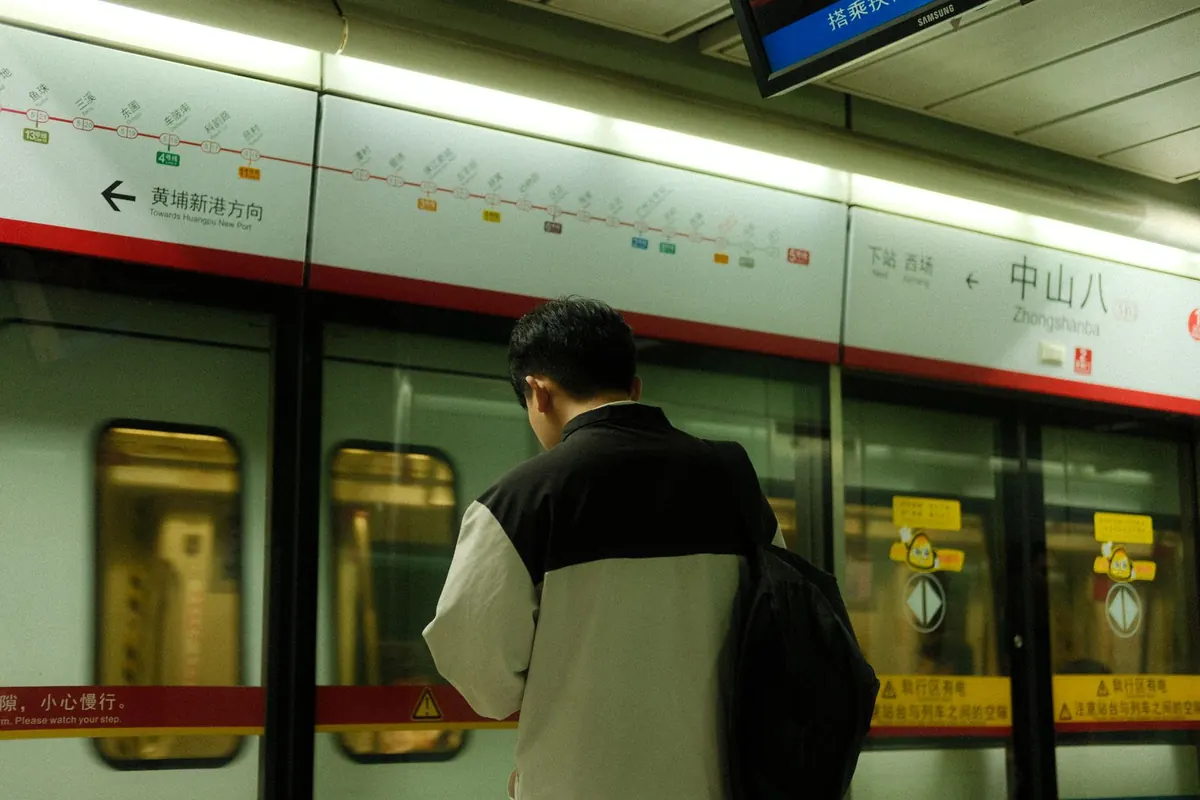
The metro reaches it and the ride out is the longest part of the day. Reckon on the better part of an hour each way from a Futian or Nanshan hotel, and a short hop by bus or on foot at the far end. Confirm the last leg before you set off, because sources disagree about whether it is a walk or a minibus.
None of that is a reason not to go. It is a reason not to bolt it onto a morning in Futian and hope.
- District
- Guangming, in the northwest
- Neighbours
- Science and Technology Museum, science park
- Travel time
- Most of an hour each way from the centre
- Time to allow
- Half a day, door to door
- Watch for
- The last leg from the station changes by source
The building, and the two hulls
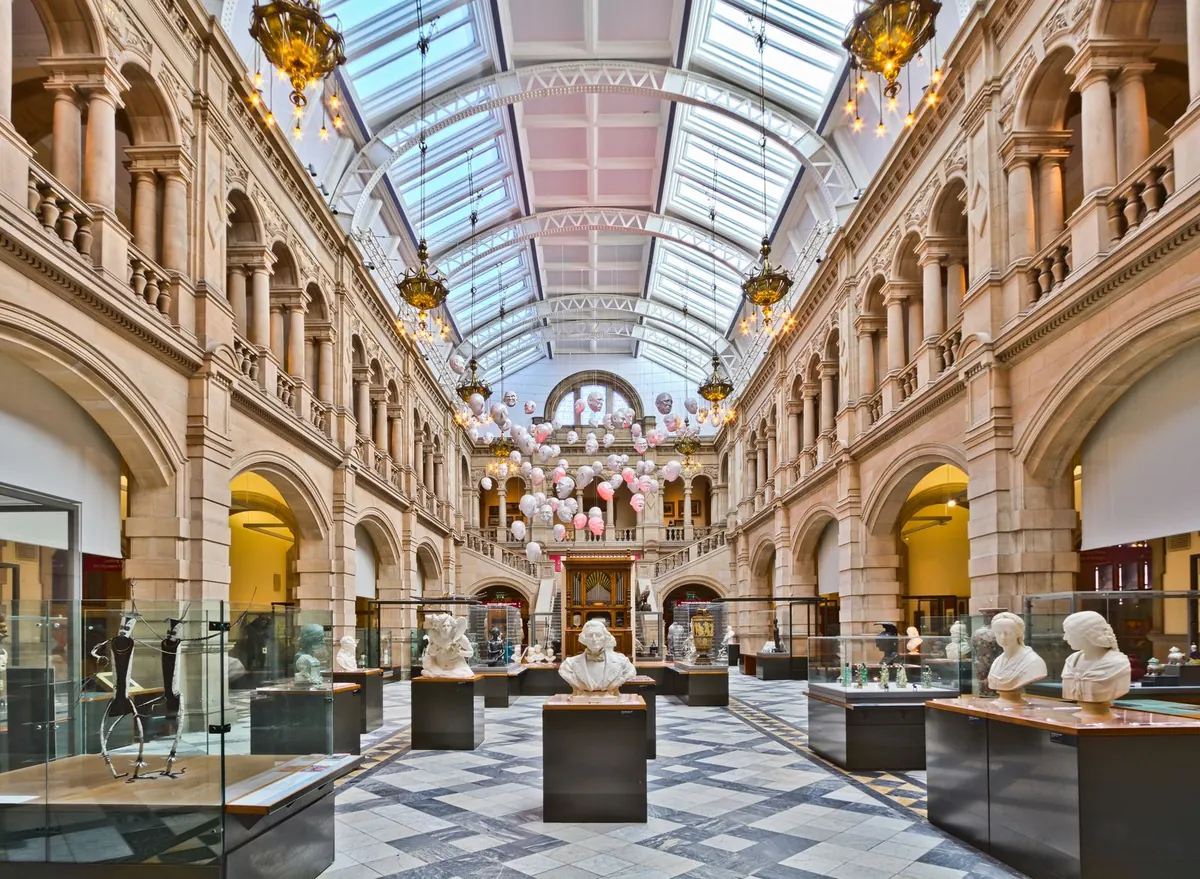
The architect is Cui Kai and the idea is two hulls, one drawn from an eastern aesthetic and one from a western, joined by a central hall. Ground was broken in September 2022. It is a 135,000 square metre building, which is large enough that the walking is a real factor in how long you last.
The detailing is where the money went. Thirteen curtain wall systems using carbon fibre and photovoltaics. A cable-supported glass wall. Metal louvres that meter the daylight before it reaches anything hanging on a wall.
The feature everybody photographs is the Moon Gate, a circular mesh installation that throws a different pattern depending on the hour. Go in the afternoon if the light matters to you. Go at opening if the crowd matters more.
Two hulls symbolising two civilisations is the kind of concept that could have been a press release and nothing else. It is not. The two halves genuinely read differently from inside, and the walk between them is the part of the building that does the most work.
- Architect
- Cui Kai
- Floor area
- About 135,000 square metres
- Broke ground
- September 2022
- Opened
- 30 May 2026
- Best for
- Anyone who came for the architecture
What is inside the fifteen halls
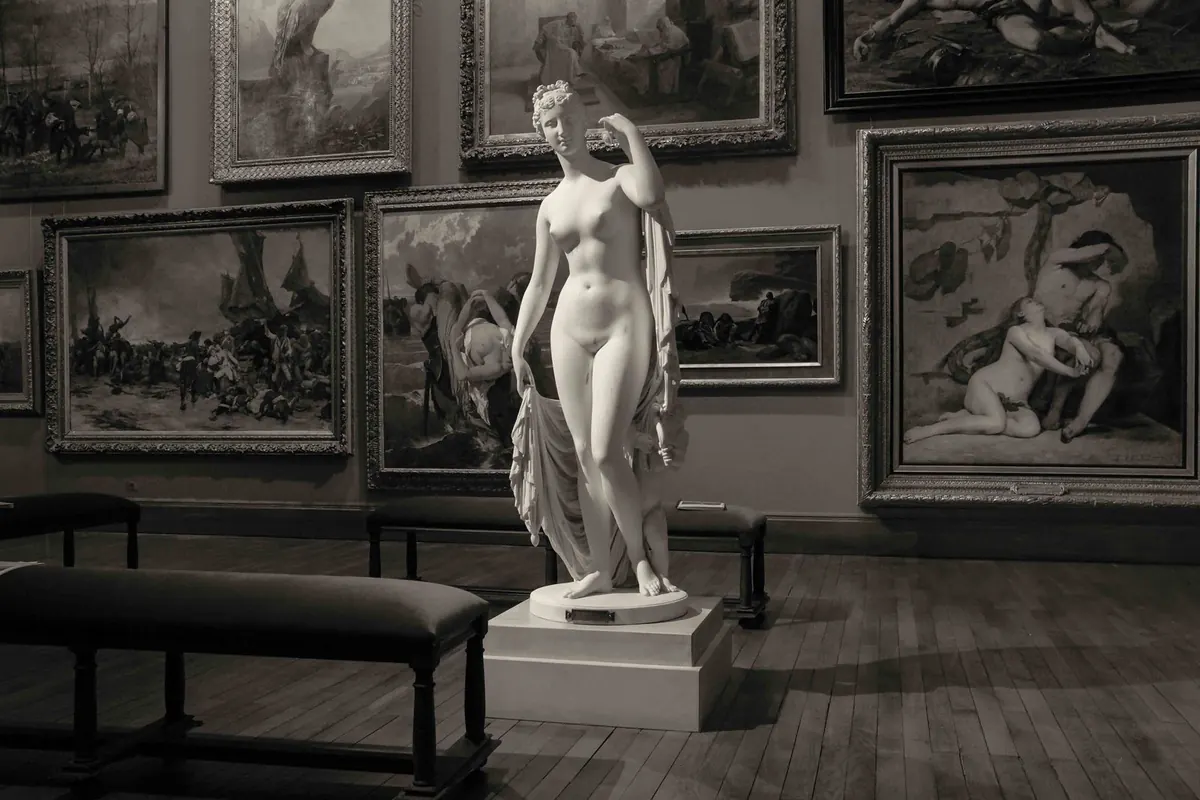
Fifteen exhibition halls, built to international loan standards, which is the specification that decides whether a foreign museum will lend you anything at all. That is not a detail for visitors. It is the whole reason a Titian can hang in Guangming.
Behind them sits a 12,000 square metre repository, a 700-seat indoor theatre, an outdoor theatre, a 200-seat lecture hall, an art library and 3,000 square metres of space for public education.
Read that list again and notice what it is. Roughly a third of this building is not galleries. It is storage, teaching rooms and stages. A museum built to borrow and to teach rather than to display a collection it already owns.
For a visitor the practical consequence is simple. The programme changes often and the building rewards a second visit more than a long first one.
What is in the building beyond the galleries.
- A 12,000 square metre repository, which is what lenders check before they say yes.
- A 700-seat indoor theatre, plus an outdoor one.
- A 200-seat lecture hall, for the talks programme.
- An art library, open to the public.
- 3,000 square metres of education space, aimed at school groups.
- Halls
- Fifteen, to international loan standard
- Time to allow
- Two hours inside, more with a talk
- Good for
- Repeat visits rather than one long one
- Bring
- A light layer. The halls are kept cool.
- Watch for
- Locker space is limited
The exhibitions, and why every listing you have read is stale
The museum opened with seven exhibitions at once, which is a statement of intent more than a programme. Bronze animal heads from the Yuanmingyuan with dozens of groups of older artefacts around them. Five centuries of the Budapest collection, Titian through Monet. Nearly fifty contemporary works by artists including Anish Kapoor and Olafur Eliasson.
Then a Xu Bing room built for children, a first art and technology biennale, ink work from the Central Academy of Fine Arts in Beijing, and a survey of Chinese abstraction.
Most of that has come down. The bronze heads closed on the twentieth of July. The Budapest loan was billed only to the end of August. Loan shows are short by nature and these were opening-week shows, which are shorter than most.
This is the thing to take from the list rather than the list itself. The opening programme tells you what this museum can get through the door. National treasures, a major European collection and two of the biggest names in installation art, in one building, in week one. Whatever is hanging when you visit will have been chosen by the people who arranged that.
Check what is on before you commit the afternoon. A wasted trip to Guangming costs more than a wasted trip to Futian, and it is entirely avoidable.
- Opened with
- Seven exhibitions at once
- Since
- The opening shows have largely closed
- Check
- The museum's own channels, the day before
- Expect
- Loans and touring shows over a fixed collection
- Watch for
- English listings that are months out of date
Tickets, booking and the part that catches foreigners out
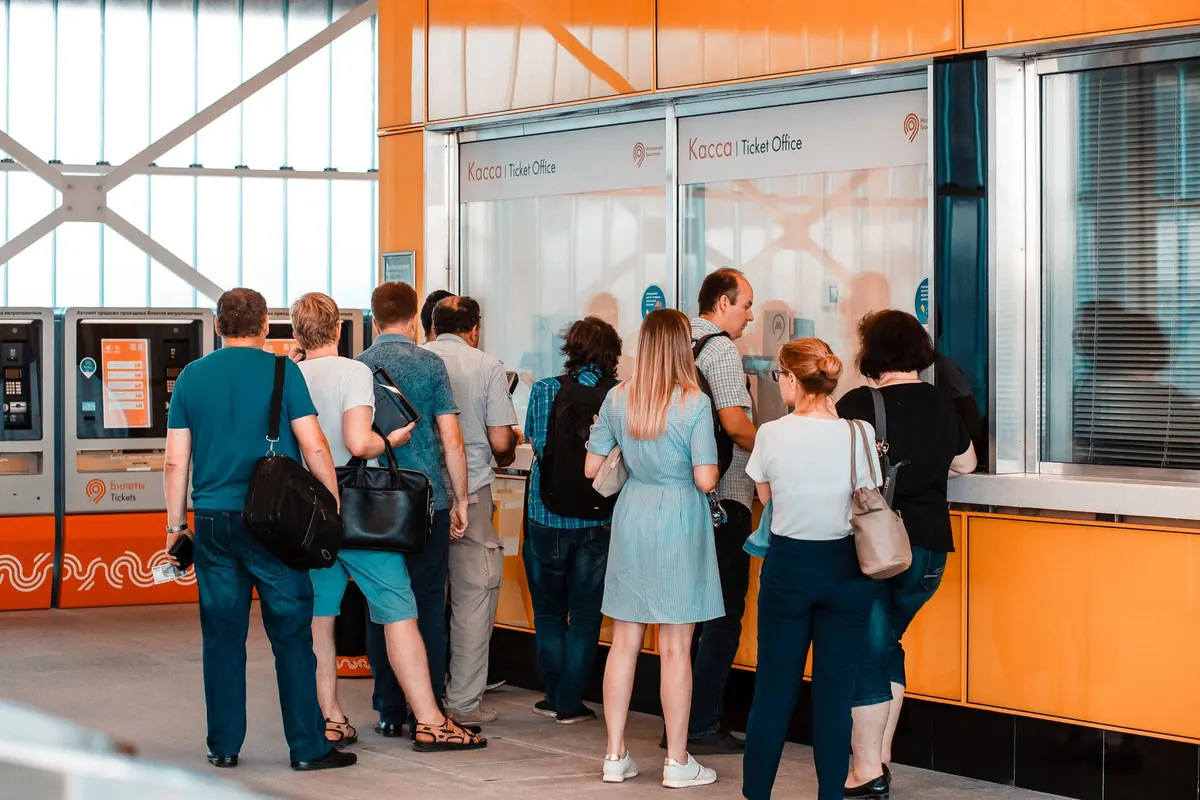
Booking runs through the museum's own WeChat account rather than a website you can use from a laptop before you fly. That single sentence is the most practical thing on this page.
There is a cheap basic ticket and a dearer all-access pass that covers the ticketed shows. Reported prices differ between sources and have already changed once since opening, so treat any figure you read as an indication and confirm on the day you book.
Two things reliably go wrong for visitors. The first is that a working Chinese payment method is assumed, the same as everywhere else in this city. The second is that slots for a popular loan show go before the weekend does.
Bring your passport. Entry to public venues here is tied to real identity, and the booking is in somebody's name whether or not that somebody is standing in front of the desk.
Nothing here is hard. It is just a sequence of small steps that all have to have happened before you are standing at a door in Guangming, and the ride back is long if one of them did not. Our post on how to pay in China as a foreigner covers the payment half properly.
- Booking
- Through the museum's WeChat account
- Tickets
- A basic ticket and an all-access pass
- Bring
- Passport, and a working payment app
- Book by
- Midweek, for a weekend loan show
- Watch for
- Prices quoted in old articles
Doing it with the science museum next door
The Shenzhen Science and Technology Museum is the other reason to come out here, and it opened first. It is the last building Zaha Hadid Architects designed for this city and it is the more dramatic of the two from the outside.
Doing both in one day is the right call for most people. You have already paid the travel cost once. Two hours in each and a break between them fills a day properly and turns a long ride into a good one.
The trap is the booking. The two museums use separate systems and a ticket to one is not a ticket to the other. People arrive having booked half of what they thought they booked, which is a bad thing to discover an hour from your hotel.
Take the art museum first if the weather is poor and the science museum first if you are travelling with children who will not last the afternoon. Both are indoors and both are cool, so the ordering is about attention rather than shelter.
If a day of new buildings is what you are after, our top five high-tech places to visit in Shenzhen and the robot street in Longgang cover the other two corners of the city. All three are separate days. Do not try to merge them.
- Neighbour
- Shenzhen Science and Technology Museum
- Booking
- Separate system. One ticket is not both.
- Shape
- Two hours each, with a break between
- Good for
- Families, and anyone who came for buildings
- Watch for
- Assuming a combined ticket exists
When to skip it
Skip it if you have two days in Shenzhen. Two days belong to Futian and Nanshan, and two hours of travel is a straight loss against that. This is a third-day building.
Skip it if nothing on this month's programme interests you. A new museum between loan shows is a very fine building with quiet rooms in it, and there is no permanent collection waiting to carry the visit. Look first, then decide.
Skip it if you were promised an Asia Art Museum and what you wanted was Asian antiquities. That is not what this is. The programme so far has been international loans and contemporary work, and the older Chinese material has arrived as visiting exhibitions rather than as a standing display.
You also do not need us for any of it. The metro goes there, the building is signed in English, and booking a museum ticket is not a skill. If your payment app works and you can read a WeChat screen with a translation tool open, go on your own.
Hire somebody when the day has a job attached. You are taking a client out and the conversation matters more than the labels. You have one free day between meetings and cannot afford to lose it to a closed hall. You want the museum, the science museum and a driver who can wait through both. That is the day a private guide in Shenzhen is worth paying for, and when it is not, we would rather tell you so.
Questions people ask
- Is there an Asia Art Museum in Shenzhen?
- No. There is no institution in Shenzhen by that name, and the search brings a lot of people to the wrong place. The large art museum in Guangming district is the Shenzhen International Museum of Art, which opened on 30 May 2026. That is almost certainly the building being asked about.
- Where is the Shenzhen International Museum of Art?
- In Guangming Science City, in the northwest of Shenzhen, next to the Shenzhen Science and Technology Museum. The metro reaches it and the ride from a central hotel takes the better part of an hour each way. Confirm the last stretch from the station before you set off.
- How do you buy tickets for the Shenzhen International Museum of Art?
- Through the museum's own WeChat account rather than an international booking site. There is a basic ticket and an all-access pass covering the ticketed exhibitions. A Chinese payment method is assumed, and you should bring your passport because entry is tied to the name on the booking.
- How long do you need at the Shenzhen International Museum of Art?
- About two hours inside for the exhibitions and the building. Add most of an hour of travel in each direction, which makes it a half day door to door. Give it a full day if you are also doing the science museum next door.
- What is on at the Shenzhen International Museum of Art?
- Check the museum's own channels rather than any article, including this one. It opened with seven exhibitions in May 2026 and most of those have since closed, including the Yuanmingyuan bronze heads in July and the Budapest loan at the end of August. The programme is built on loans and touring shows, so it turns over quickly.
- Can you visit the science museum and the art museum in one day?
- Yes, and it is the sensible way to do it, because they are neighbours and you only pay the travel cost once. Allow about two hours in each with a break between. Book them separately, because the two use different systems and one ticket does not cover both.
- Is the Shenzhen International Museum of Art worth visiting?
- On a longer trip, yes, especially if a loan show you want is hanging or you came for the architecture. On a two-day trip, no, because the travel eats the time you would rather spend in Futian and Nanshan. Look at what is on before you decide, since there is no permanent collection to fall back on.
Planning a trip around this?
Send your dates and we will tell you what the week actually looks like.